现在我们去面试,面试官要求我们使用Java写出求解斐波那契数列指定项的函数,可能乍一听很简单,我们在大一的c语言课上就学过递归求解斐波那契数列的指定项,于是大笔一挥,写下如下的第一种解法:
一、递归求解斐波那契数列
1
2
3
4
5
6
7
8
9
10
public static long fibonacci (int n) { if (n<0 ) throw new IllegalArgumentException ("Illegal Index" ); else if (n == 0 ) return 0 ; else if (n == 1 ) return 1 ; else return fibonacci(n-1 )+fibonacci(n-2 ); }
恩,我们考虑了代码的鲁棒性,考虑了n小于0时候的特殊处理,我们也能通过这个函数算出斐波那契数列指定项,但是面试官一定不会满意。我们来分析以下这个代码的缺点:
1、递归本质上是栈,当参数达到一定大小的时候会发生栈移出;
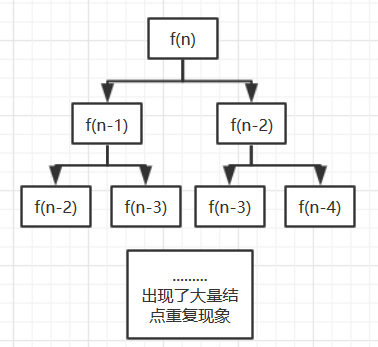
2、从算法实现上来分析,我们要计算fibonacci(n)就需要计算fibonacci(n-1)和fibonacci(n-2),计算fibonacci(n-1)需要计算fibonacci(n-2)和fibonacci(n-3),计算fibonacci(n-2)需要计算fibonacci(n-3)和fibonacci(n-4)……实际上把这个递归算法的递归树画出来,我们会发现很多树结点是重复,也就是我们本来可以不重复计算那么多次;
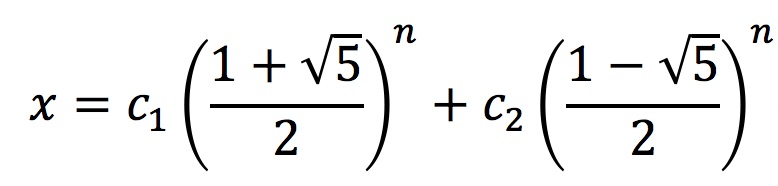
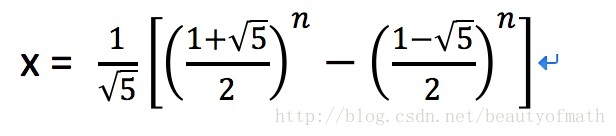
3、从时间复杂度上来分析,很明显n时的复杂度:f(n)=f(n-1)+f(n-2) 为数学上的二阶常系数差分方程,并且为齐次方程。它的时间复杂度为Ω(ф^n),其中ф为黄金分割数(√5 + 1)/2,Ω表示算法复杂度最小是这么多。也就是说这个算法的复杂度为指数级的复杂度,指数级的时间复杂度我们怎么能容忍?
附录
设f(n)为参数为n时的时间复杂度,很明显:f(n)=f(n-1)+f(n-2)
因此这样的算法只适合帮助我们理解递归,不适合用来真正求解斐波那契数列。
二、从下往上计算,根据f(0)和f(1)计算出f(2),根据f(1)和f(2)计算出f(3),直到计算出第n项
1
2
3
4
5
6
7
8
9
10
11
12
13
14
15
16
17
18
19
20
public static long fibonacci (int n) { if (n < 0 ){ throw new IllegalArgumentException ("Illegal Index" ); } else if (n == 0 ) return 0 ; else if (n == 1 ) return 1 ; long fibnoacciNMinusOne = 1 ; long fibnoacciNMinusTwo = 0 ; long fibN = 0 ; for (int i = 2 ; i<=n; i++){ fibN = fibnoacciNMinusOne + fibnoacciNMinusTwo; fibnoacciNMinusTwo = fibnoacciNMinusOne; fibnoacciNMinusOne = fibN; } return fibN; }
使用这种方式,我们杜绝了大量的重复计算,使用中间值把需要的前两次计算的结果保存起来,下次要用直接查找使用,而不是再次计算。这样优化之后的算法时间复杂度为O(n),也就是最多为n,明显比递归要好上不少。但是到这里就结束了吗?不是的,我们还有第三种思路。
三、利用数学公式的时间复杂度O(logn)的算法
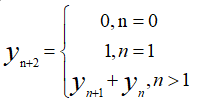
在代码实现之前,我们需要推导一个公式,首先来看一下斐波那契数列的递推公式:
根据这个公式我们可以得到一个公式:
而且当n=2的时候,以上的公式也是成立的,因此上面的公式在n>=2的时候总成立,所以我们可以得到另一个公式:
我们可以用这个公式来计算斐波那契数列。如果我们从0开始,直到n-1计算矩阵的n-1次幂,时间复杂度仍然是O(n),并不比上面的第二种算法快,我们先实现这种O(n)复杂度的算法:
1
2
3
4
5
6
7
8
9
10
11
12
13
14
15
16
17
18
19
20
21
22
public static long fibonacci (int n) { if (n<0 ) throw new IllegalArgumentException ("Illegal Index" ); long [][] basicMatrix = {{1 ,1 },{1 ,0 }}; long [][] matrix = calPowerOfMatrix(basicMatrix, n-1 ); return matrix[0 ][0 ]; } private static long [][] calPowerOfMatrix(long [][] matrix, int n){ for (int i = 0 ; i<n-1 ; i++){ long a = matrix[0 ][0 ]; long b = matrix[0 ][1 ]; long c = matrix[1 ][0 ]; long d = matrix[1 ][1 ]; matrix[0 ][0 ] = a + b; matrix[0 ][1 ] = a; matrix[1 ][0 ] = c + d; matrix[1 ][1 ] = c; } return matrix; }
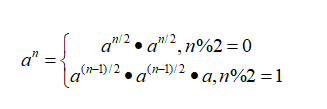
但是乘方是具有以下性质的:
利用这个性质,我们可以利用这个公式使用二分法来递归实现斐波那契数列的求解,复杂度可以达到O(logn):
计算矩阵的(n-2)次方,我们又可以进行分解,即计算矩阵(n-2)/2次方的平方,逐步分解下去,由于折半计算矩阵次方,因而时间复杂度为O(log n)
1
2
3
4
5
6
7
8
9
10
11
12
13
14
15
16
17
18
19
20
21
22
23
24
25
26
27
28
29
30
31
32
33
34
35
36
37
38
39
40
41
42
43
44
private static long[][] calPowerOfMatrix (long[][] matrix, int n ) { if (n < 0 ) throw new IllegalArgumentException ("Illegal Index" ); else if (n == 1 ) return matrix; else if (n % 2 == 0 ) return calSquareOfMatrix ((calPowerOfMatrix (matrix, n >> 1 ))); else return calBasicMutipyOfMatrix (calSquareOfMatrix (calPowerOfMatrix (matrix, (n - 1 ) >> 1 ))); } private static long[][] calBasicMutipyOfMatrix (long[][] matrix ) { long a = matrix[0 ][0 ]; long b = matrix[0 ][1 ]; long c = matrix[1 ][0 ]; long d = matrix[1 ][1 ]; matrix[0 ][0 ] = a + b; matrix[0 ][1 ] = a; matrix[1 ][0 ] = c + d; matrix[1 ][1 ] = c; return matrix; } private static long[][] calSquareOfMatrix (long[][] matrix ){ long a = matrix[0 ][0 ]; long b = matrix[0 ][1 ]; long c = matrix[1 ][0 ]; long d = matrix[1 ][1 ]; matrix[0 ][0 ] = a*a + b*c; matrix[0 ][1 ] = a*b + b*d; matrix[1 ][0 ] = a*c + c*d; matrix[1 ][1 ] = b*c + d*d; return matrix; } public static long fibonacci (int n ) { if (n < 0 ) throw new IllegalArgumentException ("Illegal Index" ); long[][] basicMatrix = { { 1 , 1 }, { 1 , 0 } }; long[][] matrix = calPowerOfMatrix (basicMatrix, n - 1 ); return matrix[0 ][0 ]; }
这样就利用乘方的特性和斐波那契递推公式得出的公式写出了基于递归二分法复杂度为O(logn)的算法,这样才应该是最优的解法。